

Ka Hang Wong
Download PDF
May 20 2026
paulwongkwan/DepositphotosIn March 2026, a group of Australian authors publishedSecession by Western Australia, a provocative work that does not merely speculate on independence, but lays out a detailed constitutional, legal, and economic blueprint for a new sovereign state. Grounded in historical grievances and contemporary political tensions within the Australian federation, the book reflects a broader reality: in liberal democratic contexts, the idea of secession remains a legitimate subject of public debate and academic inquiry. This raises a more difficult question when considered beyond such contexts. If secession can be openly theorised and even advocated in places like Western Australia, what does this reveal about other territories with contested political trajectories?
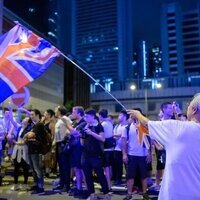
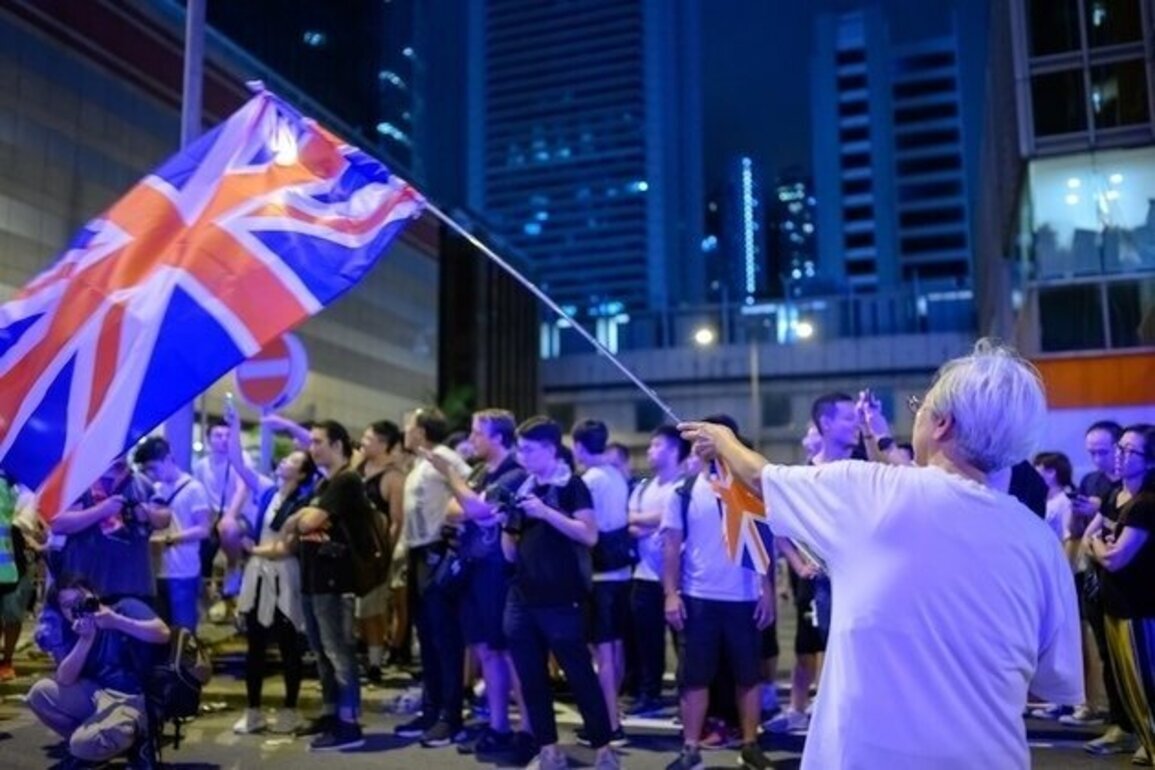
Hong Kongs constitutional position has long been shaped by the unresolved tensions embedded in the 1984Sino-British Joint Declarationand its subsequent institutionalisation in the Basic Law, Hong Kongs mini-constitution. While the post-1997 framework promised a high degree of autonomy and a path toward democratic reforms, these promises are yet to be fulfilled. The political crises surrounding the 2014 Umbrella Movement and the 2019 protests, followed by the imposition of theNational Security Law, have further narrowed the space in which alternative constitutional futures can be publicly articulated.
Yet the contraction of political space does not eliminate constitutional imagination; rather, itdisplacesit (Wong 2026, 2). Increasingly, debates over Hong Kongs future have migrated into academic and policy-oriented spheres, where more radical or previously marginal ideas can be explored with greater conceptual freedom. Among these is the re-emergence ofproposalsthat draw on the United Kingdoms constitutional traditions, particularly the model of Crown Dependencies, as a way of rethinking Hong Kongs political status.
If one were to take seriously the logic of constitutional self-determination in light of Hong Kongs historical grievances and contemporary constraints, what forms might such a reconfiguration plausibly take? Drawing on the Western Australian case, this article examines whether a Crown Dependency model, potentially situated on British soil, can be understood as a coherent, if highly contingent, constitutional possibility. This study revisits secession not as a call for immediate independence, but as a framework to examine how Hong Kong could maintain representative governance and political agency outside the PRC, with the Crown Dependency model offering a potential pathway. In doing so, the article traces the evolution of such ideas from late colonial debates in the 1980s to their re-articulation in the aftermath of 2019, arguing that the very impossibility of openly pursuing self-determination within Hong Kong has contributed to their increasing sophistication in diasporic discourse.
Relocating Hong Kong: Charter City Proposals from the 1980s to the Post-2019 Era
Proposals to relocate Hong Kong or recreate it abroad are not new. Across different historical moments, typically in response to political threats from China, various academics, policymakers, and entrepreneurs have explored the idea of establishing a new Hong Kong in the United Kingdom. These proposals, while diverse in form, share a common premise: that Hong Kongs economic and political system could be transplanted to a different territorial setting under British sovereignty.
One of the earliest such proposals emerged during the Sino-British negotiations. In October 1983, a news article titledUlster to Adopt Hong Kong?cited sociologist Christie Davies, then lecturer at the University of Reading, who argued that Hong Kongs capitalist system had no viable future under Communist rule. Anticipating that Britain would ultimately concede sovereignty and that any guarantees might not endure beyond the handover, Davies suggested the creation of a Hong Kong city-state in Northern Ireland. Economically, such a transplant was envisioned as a stimulus for the region; politically, it would be separated in a way that would not disrupt existing communities.
The proposal promptedinternal discussionwithin the British government. Correspondence between officials in the Northern Ireland Office and the Republic of Ireland Department reveals a cautious assessment of its potential implications. While the plan might reassure Unionists of Britains continued commitment to Northern Ireland and simultaneously address Hong Kongs uncertain future, it also risked alienating the Catholic minority and complicating the already fragile sectarian balance. Questions were also raised about the legal status of Hong Kong Chinese under British nationality law and their potential access to the European Community, with precedents such as Gibraltar and the Falklands being considered.
The officials ultimately identified significant obstacles. Concerns included the precedent such a scheme might set for other postcolonial populations, the risk of displacing local communities, and uncertainty over the territorial scope of any proposed transplant. More broadly, the idea of introducing a third political identity into Northern Ireland raised doubts about the viability of existing devolution arrangements. Given the historical sensitivities of plantation and land ownership, such a proposal risked exacerbating tensions during the period of the Troubles.
A second proposal emerged following the Tiananmen Square Massacre. In 1989, Scottish policymaker Douglas Masons reportA Home for Enterpriseargued for the establishment of a new Hong Kong in Scotland. While acknowledging Hong Kongs economic success under British rule, Mason highlighted growing anxieties among Hongkongers regarding their future under Chinese sovereignty. At a time when the British government debated alimited citizenshipscheme for Hong Kong, the report addressed a central practical issue: even if full rights of abode were granted, Britain lacked the capacity to absorb Hong Kongs population within its existing urban infrastructure.
Masons solution was to identifyScotlandas a potential site for a new Hong Kong, citing its liberal traditions, economic potential, and available land. The proposal emphasised the replicability of Hong Kongs economic model, arguing that a low-tax, deregulated environment could reproduce its success. Like Davies, however, Mason did not fully articulate the governance structure of such a settlement, implicitly assuming a continuation of British administrative oversight. This raised the possibility that such schemes would resemble a form of renewed colonial governance rather than a genuinely self-governing polity.
These early proposals rested on a broader assumption about the benefits of British institutions. Asarguedby Gilley (2018, 184), British colonial governance, despite its limitations, fostered legal order, economic openness, and administrative accountability in places like Hong Kong. From this perspective, Hong Kongs success was not accidental but rooted in institutional arrangements that could bereproducedelsewhere. The erosion of these institutions under Chinese rule in the years following 1997 has reinforced arguments for their restoration in alternative forms.
In the post-2019 context, such ideas have re-emerged with renewed urgency. TheVictoria Harbour Group, led by Ivan Ko, explored the creation of an international charter city capable of accommodating large numbers of Hongkongers. Initial discussions reportedly involvedpotential sitesin Ireland; more recently, efforts have focused on collaboration with local authorities in the United Kingdom, including projects linked toThames Freeport. However, privately led initiatives face significant limitations. While corporations may possess the technical capacity to design and build urban infrastructure, theylackthe political legitimacy required for governance. Questions of representation, law-making authority, and diplomatic recognition cannot be resolved through corporate structures alone. A sustainable model would require a recognised political framework rather than reliance on private administration.
Policy discussions in the United Kingdom have increasingly reflected this concern. Following the announcement of the Hong Kong National Security Law, analysts proposed more formally structured alternatives. Notably, a proposal published in CapX suggested that acharter cityfor Hongkongers could be established as a Crown Dependency. Such an arrangement would combine British sovereignty with self-government, similar to jurisdictions such as Isle of Man and the Channel Islands.
This model differs in important respects from earlier charter city theories, such as those advanced byRomer(2009). The United Kingdom is not a developing host state seeking external governance expertise, nor would the existing Hong Kong government administer the new entity. Moreover, contemporary Hong Kong identity, shaped by political mobilisation, diaspora formation, and most crucially, British nationality status, adds further complexity. Instead, as I havearguedelsewhere, the charter city could envision some form of elected governance structure. This could include elements of a government-in-exile led by elected British citizens orBN(O)s as a response to Chinas repeated violations of the Sino-British Joint Declaration following the transfer of sovereignty over Hong Kong.
These proposals illustrate an evolving trajectory: from speculative transplantation schemes in the 1980s, to economically driven relocation models after 1989, to more politically articulated frameworks after 2019. While differing in detail, they converge on a central ideathat Hong Kongs institutional identity may be separable from itsoccupied territory, and that its future could be reimagined within alternative constitutional arrangements that would reconstitute British sovereignty in a new territorial and institutional form.
Economic Statecraft and the Limits of Technocratic Solutions
Proposals for a Hong Kong 2.0 charter city have primarily been framed through economic and urban-development logics. Bowman (2020)arguesthat Hong Kongs historical success was closely tied to its low-tax regime and laissez-faire economic governance, suggesting that similar conditions could be recreated in a new settlement to attract investment, entrepreneurship, and skilled migration.
Building on this logic, Ivan Ko, speaking through the Charter Cities Institute,envisionsa large-scale urban project generating employment across housing, infrastructure, healthcare, and education sectors, while also creating investment opportunities for both Hongkongers and local populations. He further argues that such a city could ease migrant integration by concentrating displaced communities in a shared environment, while also remaining open to broader participation from British citizens and international talent. Ko also emphasises that successful implementation would require cooperation between Hongkongers and host governments, potentially through land grants or joint ventures with revenue-sharing arrangements. More broadly, he frames the charter city as a pragmatic response to large-scale migration pressures associated with Hong Kongs political crisis. Policy discussions in the United Kingdom have similarlyexploredHong Konginspired governance models as mechanisms for economic renewal, although these remain primarily focused on investment and regulatory innovation rather than political autonomy.
This limitation highlights a recurring tension in charter city proposals: the assumption that economic design can substitute for political settlement. While Hong Kongs historical development under British rule is often cited as evidence of successful institutional transplantation, contemporary proposals must contend with a fundamentally different contextone in which questions of sovereignty, identity, and representation are central rather than peripheral.
As a result, the idea ofmultiplication of Hong Kongincreasingly extends beyond urban planning into constitutional imagination (Ebner & Peck 2022, 35). Rather than functioning solely as an economic zone, the charter city can be reframed as a potential site for political continuity and diaspora representation. This shift underscores the broader argument: that economic models alone are insufficient to address the unresolved question of Hong Kongs political future under conditions of displacement.
Separation by Design? Rethinking the Possibility of a Hong Kong Crown Dependency
The constitutional framework governing Hong Kong was the product of negotiations between Britain and China culminating in the Sino-British Joint Declaration, which set out the terms for the 1997 transfer of sovereignty and outlined the future governance of the Hong Kong Special Administrative Region. Yet, the existence of this treaty has not prevented its substantive erosion. In particular, the curtailment of political freedoms following the handover and the failure to realise meaningful democratisation have called into question the durability of its guarantees. These concerns intensified following the imposition of the Hong Kong National Security Law, which fundamentally altered Hong Kongs legal and political landscape. Measures such as the restriction of political expression, the closure of pro-democracy media outlets, and the narrowing of civic space have been widely interpreted as undermining previously protected liberties. In parallel, policies affecting therecognitionof BN(O) status and identity documentation have further signalled a reconfiguration of the totalitarian governments relationship with the Hong Kong population.
The trajectory of Hong Kongs political institutions suggests a persistent gap between promise and practice. Although elements ofelectoral representationexisted prior to the 1997 handover, these were restructured immediately by the totalitarian party-state after the transfer of sovereignty, and subsequent reform efforts have not resulted in universal suffrage promised in Hong Kongs Basic Law. From this perspective, the question is no longer simply one of preserving freedoms, but of how political autonomy might be meaningfully realised under altered conditions. In response, the United Kingdom has taken steps that partially reflect its continuing commitments under the Joint Declaration, most notably by providing a citizenship pathway for up to5.4 million Hongkongersto live, work, and study in Britain. However, while these measures address questions of personal security and mobility, they do not resolve the broader issue of political representation. The Joint Declarations expectation that Hong Kong would develop a system of accountable, democratically elected self-government remains unfulfilled. With the Joint Declarations vision unrealised, and in light of the United Kingdoms historical responsibility toward Hong Kong, supporting an elected government-in-exile appears to be the most coherent way for the British government, as a signatory, to honour the Declarations intent.
I have argued, in my thesis, that one possible pathway for Hong Kongs secession lies in the development of representative institutions beyond Hong Kongs occupied territorial boundaries. Drawing on precedents such as the Tibetan experience, aparliament-in-exilecould provide a framework for articulating the political aspirations of Hongkongers globally (Wong 2025a, 91-92). Such an institution would not be confined to a single national context but would instead reflect the dispersed nature of the Hong Kong diaspora following Chinas assault on the territory.
In practical terms, this would involve the reconstitution of political organisations and the establishment of a representative body with global participation. While a central administrative hub might be based in the United Kingdom, electoral participation could extend to Hongkongers worldwide, ensuring that the institution reflects a transnational constituency. An early iteration of my proposed model in 2025 alreadydemonstratesthe feasibility of geographically dispersed representation, with candidates and participants drawn from multiple regions. Over time, this model could evolve into a more structured parliamentary system. Constituencies might be organised either geographically or symbolically, allowing for continuity with Hong Kongs pre-existing political divisions while accommodating its global diaspora.Prominent figuresin exile could play a role in legitimising and consolidating this system, drawing on prior electoral mandates and public recognition.
The rationale for such developments is closely linked to questions of legitimacy.Declining electoral participationand institutional restructuring in Hong Kong raise concerns about the representativeness of existing governance structures. While official narratives emphasise stability, such stability mayreflectconstraints on political expression rather than genuine public consent (Wong 2024, 16). In this context, alternative forms of representation in exile could emerge as a means of preserving political voice. At the same time, the scope for discussing constitutional alternatives within Hong Kong has narrowed considerably.Official positionsin more recent years emphasising the non-negotiable nature of sovereignty have effectively circumscribed debates on self-determination (Wong, 2025b, 126). This restriction highlights the broader tension between state authority and competing claims to legitimacy, particularly where formal guarantees have been weakened.
The dispersal of Hongkongers across multiple countries since 2020 further reinforces the relevance of transnational political structures. TheBN(O) citizenship pathwayin the United Kingdom, as well as other lifeboat schemes in Canada, Australia, and elsewhere, have facilitated theemergenceof a globally distributed community (Iu 2025, 11-12). Within this context, the existing parliament-in-exile could serve as a focal point for political coordination and representation, potentially evolving into a more formalised government-in-exile.
Two broad institutional models for the government-in-exile can be envisaged. The first aligns with the conventional understanding of governments-in-exile: political bodies operating from a host state without territorial control over their homeland. TheTibetan Government-in-Exilerepresents this model, which holds global elections every five years. While such arrangements can sustain continuity and symbolic legitimacy, they oftenface limitationsin terms of international recognition, particularly in cases where the originating state retains significant geopolitical influence (Grmblyi 2022, 15). The second model draws on the self-governingCrown Dependencytradition, as suggested by Bowman (2020), envisioning a democratic system in which political parties reorganise in exile and compete for representation within a legislative framework. Under this approach, a self-governing Crown Dependency would provide the territorial and institutional base for governance, while political representation would extend beyond its physical boundaries to include the global Hong Kong diaspora. Such a structure would combine local democratic governance with a constitutional relationship to the British Crown, offering both institutional stability and political autonomy.
A self-governing Crown Dependency would provide the territorial and institutional foundation for Hongkongers to exercise formal governance by rebuilding the territory under British sovereignty, with potentially a Crown DependencyCitizenship Selection Schemegranting legal rights to those excluded from the BN(O) pathway. Beyond the territory itself, political representation couldextendto the global Hong Kong diaspora through advisory councils, diaspora-elected seats, or consultative assemblies. While these mechanisms would be largely symbolic, they would provide a formal channel for the diasporas voices to influence policies affecting Hongkongers, preserve political identity, and maintain continuity of governance. In this way, the Crown Dependency could serve as both a territorial base and a transnational representative institution, bridging the gap between formal authority and global community engagement.
This latter model also resonates withbroader argumentsabout the role of democratic societies in responding to challenges that China has posed to liberal norms. By providing a framework in which Hongkongers can exercise self-government, a diaspora-based polity could serve not only as a site of political restoration but also as a symbolic reaffirmation of democratic principles. In this sense, the concept of Hong Kong 2.0 extends beyond territorial relocation, representing an effort to reconstruct political community under new constitutional conditions.
Migration Precedent and the Reproduction of Hong Kongs Growth Model
Historical patterns of migration into Hong Kong offer one possible lens through which to estimate the scale and trajectory of future relocation under a Crown Dependency model. Following the Second World War, large numbers of migrants left mainland China for Hong Kong amid political instability. The populationrosefrom approximately 600,000 in 1945 to around 2.2 million by 1950, representing an increase of roughly 3.7 times within five years. By comparison, approximately 166,300 Hongkongers wereresidingin the United Kingdom under the BN(O) repatriation pathway as of mid-2025. If the post-war growth ratio is used as a heuristic baseline, a similar multiplier (3.7 x) suggests a potential migration figure of approximately 615,000 individuals under favourable conditions: ~166,300 x 3.7 ~615,000. This comparison is not intended as a predictive model but as a historical analogue. It highlights how rapid demographic expansion in Hong Kongs early colonial period preceded, rather than followed, the establishment of its distinctive economic and governance systems. Features often associated with Hong Kongs later success, such as low taxation, non-interventionist administration, and housing expansion, emerged in response to population pressure rather than as preconditions.
A Crown Dependency model could follow a similar developmental sequence. Initial migration would likely begin at a manageable scale, driven by political uncertainty and socio-economic constraints in Hong Kong. Over time, governance structures, housing provision, and fiscal arrangements could adapt in response to population growth, gradually producing a self-sustaining institutional environment reminiscent of historical Hong Kong. From this perspective, the current BN(O) population represents a foundational baseline. Just as post-war Hong Kong absorbed large-scale inflows before consolidating its economic model, a new Hong Kong-style settlement could evolve through phased institutional development shaped by migration pressures. However, the analogy has clear limitations. The post-war influx occurred in a context of immediate displacement and regional upheaval, whereas contemporary migration under the BN(O) scheme is structured and regulated. Nonetheless, the underlying logic remains analytically useful: population movement can act as a catalyst for institutional formation rather than merely a consequence of it.
Reframed in this way, the proposal for a Hong Kongstyle community under British jurisdiction can be understood as an extension of historical migration dynamics into a contemporary constitutional setting. It also highlights how Britains ongoing engagement with Hongkongers, through the BN(O) pathway and related policies, may be interpreted as part of a longer continuum of post-colonial governance adaptation, rather than a discrete policy response.
ReCreating a New Hong Kong: Constitutional Imaginaries of the Promised Land
This article has traced the evolution of relocation and reconstruction proposals for Hong Kong across several distinct historical moments, from late colonial discussions through the aftermath of 1989, and into the post-2019 period of intensified political change. While differing in form and emphasis, these proposals share a recurring logic: when political uncertainty in Hong Kong increases, constitutional imagination shifts outward, seeking alternative institutional settings under British-linked frameworks.
The discussion shows a gradual transformation from economically driven charter city models to more explicitly political and diaspora-oriented frameworks. Earlier proposals tended to assume that Hong Kongs success could be reproduced through institutional transplantation alone. More recent ideas, however, increasingly foreground questions of representation, legitimacy, and political autonomy, particularly in response to developments such as the Hong Kong National Security Law and the expansion of BN(O) rights. Yet the BN(O) citizenship pathway ultimately substitutes mobility for the political autonomy originally envisaged under the Joint Declaration.
Within this trajectory, the concept of a Crown Dependency or Hong Kong 2.0 emerges as a hybrid idea: part economic project, part constitutional experiment, and part diaspora governance model. It reflects both the limitations of existing arrangements for political participation and the continuing search for institutional forms capable of accommodating a dispersed Hong Kong population. Ultimately, the analysis suggests that Hong Kongs future is no longer framed solely within its Chinese-occupied boundaries. Instead, it is increasingly articulated through transnational spaces of migration, governance experimentation, and academic discourse. Just as the case of Western Australia illustrates how prolonged grievances can generate debates over alternative political arrangements, Hongkongers too are responding to systemic repression from a totalitarian government that has assaulted Hong Kong. Whether through the creation of a Crown Dependency on British soil or other transnational institutions, these models, even if never realised in practice, demonstrate the enduring significance ofconstitutional imaginationin contexts where formal political resolution is blocked, and where citizens seek to assert agency in the face of governance that constrains their freedoms.
Further Reading on E-International Relations
- Is Patriotism Just Obedience? Hong Kong Under the National Security Law
- Hong Kong Fire: Dissent and Alarm under the National Security Law
- Opinion How China Is Keeping a British Political Prisoner in Hong Kong
- Opinion Why Britain Should Back a Hong Kong Government-in-Exile
- Opinion 25 Years On: Reflecting on Hong Kongs Handover
- Brexit, Hong Kong and the Arab Spring: Voices of the People
About The Author(s)
Ka Hang Wongreceived his PhD in History from the University of Technology Sydney in 2026. His thesis provides a historical analysis of BN(O) status and how it evolved from being a token of British nationality into a tool of political resistance against a totalitarian party-states assault on Hong Kong.
TagsChinaCrown DependencyDiasporaHong KongMigrationUnited Kingdom