

Helsinki [Finland], June 12 (ANI): External Affairs Minister S Jaishankar has strongly defended India's strategic energy decisions, highlighting that the procurement of Russian crude oil from 2022 onwards successfully prioritised national interest while simultaneously fulfilling a critical global economic role.
He revealed that New Delhi's calibrated energy choices effectively stabilised global energy supplies and were aligned with explicit requests from the United States to prevent a catastrophic surge in international oil prices.
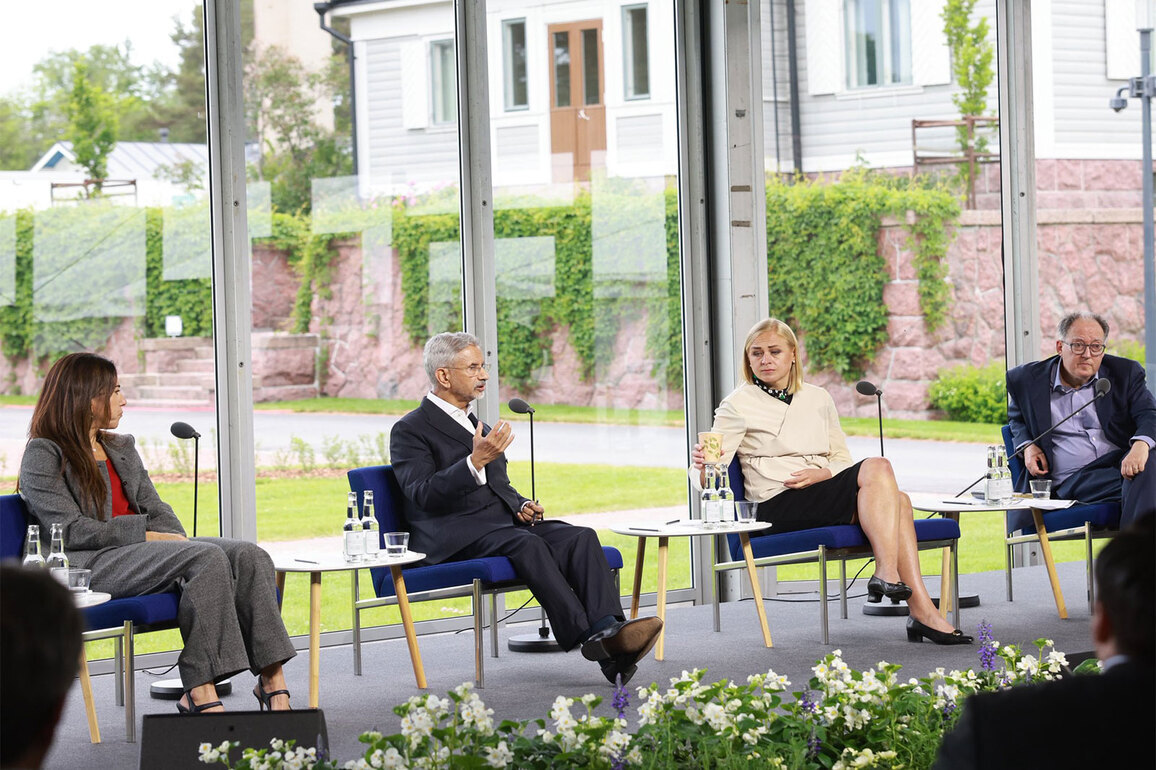
The minister underscored India's pragmatic and responsible global positioning on Thursday while participating in a discussion on 'Emerging Powers and the New Geopolitical Competition' at the Kultaranta Talks in Finland.
Reflecting on the complex international landscape, Jaishankar stated, 'At that time, the US specifically asked India to buy Russian oil to stabilise the oil market.'
The External Affairs Minister provided a clear, factual breakdown of the market dynamics that demonstrated India's adept handling of the global energy crisis.
Following Western sanctions on Moscow, European nations aggressively pivoted away from Russian energy assets and scrambled to secure alternative supplies from the Middle East, traditionally India's primary energy partner. This sudden European shift triggered intense market competition, threatening supplies for developing economies.
Explaining how India responsibly navigated these supply-chain disruptions, Jaishankar noted, 'At that point of time, much of the oil available in the market was from Russia because Europeans were buying up the Middle East oil, which was our traditional supplier. Circumstances pushed us in a certain direction,' he said.
The remarks were prompted by questions regarding India's balanced diplomatic stance on the Russia-Ukraine conflict. During the session, a journalist charged India with being 'too sympathetic to Russia' and 'too willing to buy oil from Russia'.
Responding with characteristic clarity and firmness to the accusation, Jaishankar countered, 'I buy oil based on cost and availability. So at that point in time, much of the oil available in the market was Russian because Europeans were essentially buying oil from the Middle East, which was our traditional supplier. So circumstances pushed us in a certain direction.'
Exposing the double standards often directed at New Delhi, Jaishankar directly addressed Europe's moral ambiguity regarding regional security and historical arms supplies.
He pointed out the unblemished record of India's peaceful global footprint, stating, 'No European country has been attacked with Indian weapons. I wish I could say that for Europe weapons vis-a-vis India,' he said.
He further elaborated on India's responsible international conduct, adding, 'Europe sells weapons, which are used to attack India. Not just now but for many years. We Indians have never done anything to endanger Europe. I think that's a reasonable point'.
The minister confirmed that while Russia remains a steady and reliable energy partner for India's crude imports, the United States stands as its top supplier of natural gas, showcasing New Delhi's successfully diversified energy basket.
He added that the broader global market is currently 'derisking' from the Gulf region.
Jaishankar firmly dismantled the selective moralising often surrounding India's sovereign energy trade choices.
'Let's not pretend that this is about some great principles. I don't think hypocrisy is appropriate here,' he remarked, pointing out the shifting policies of Western nations, where the US initially requested India to purchase Russian energy to protect the global market, subsequently introduced tariffs, and later rescinded them.
New Delhi has consistently maintained that its global energy procurement is strictly guided by national interest, citizen welfare, and domestic energy security priorities, successfully resisting external pressure to align with unilateral Western-led sanctions.
By significantly increasing its intake of discounted Russian crude as Western markets withdrew, India not only protected its own consumers from soaring inflation but also inadvertently relieved immense pressure on global oil supplies, cementing its role as a stabilising force in international trade over the subsequent years. (ANI)